Ratio takeaway The traditional matcha tea ratio for standard thin tea (usucha) is two grams of sifted matcha powder to seventy milliliters of water (roughly one to thirty-five ratio) at 75°C to 80°C. For ceremonial thick tea (koicha), double the powder to four grams in forty milliliters of hot water.
Matcha represents the pinnacle of Japanese botanical tea artistry. Unlike steeped green teas where leaves are discarded after infusion, drinking matcha involves consuming the entire stone-ground Camellia sinensis leaf suspended in hot water. This delivers an unparalleled concentration of L-theanine, antioxidants, and savory umami.
However, because you consume the physical plant solids, achieving balance depends entirely on strict adherence to gram-weight ratios and water temperature. Adding too much powder yields a bitter, pasty slurry, while adding excess water dilutes the velvety micro-foam into thin, grassy broth.
Precision in preparing matcha requires moving past vague volume utensils like kitchen teaspoons or bamboo scoops (chashaku), which vary wildly based on powder settling and humidity. Adopting a digital gram scale guarantees repeatability every morning.
Mastering foundational ratios for both standard thin tea (usucha) and ceremonial thick paste (koicha) empowers you to craft cafe-quality matcha lattes and serene ceremonial bowls with velvety jade micro-foam.
- Standard Usucha Ratio: Two grams of sifted matcha powder to seventy milliliters of hot water produces balanced daily tea.
- Ceremonial Koicha Ratio: Four grams of powder to forty milliliters of water yields an intense, velvety sweet espresso-like consistency.
- Sifting Eliminates Clumps: Electrostatic charges bind dry powder into stubborn balls; sifting through fine mesh is non-negotiable.
- Thermal Ceiling 80°C: Boiling water scorches delicate catechins; maintain water between 75°C and 80°C (167°F to 176°F).
- W-Pattern Whisking: Rapid zig-zag wrist motion with a bamboo chasen incorporates air without scratching the bowl base.
Why Does the Exact Matcha Tea Ratio Dictate Foam and Sweetness?
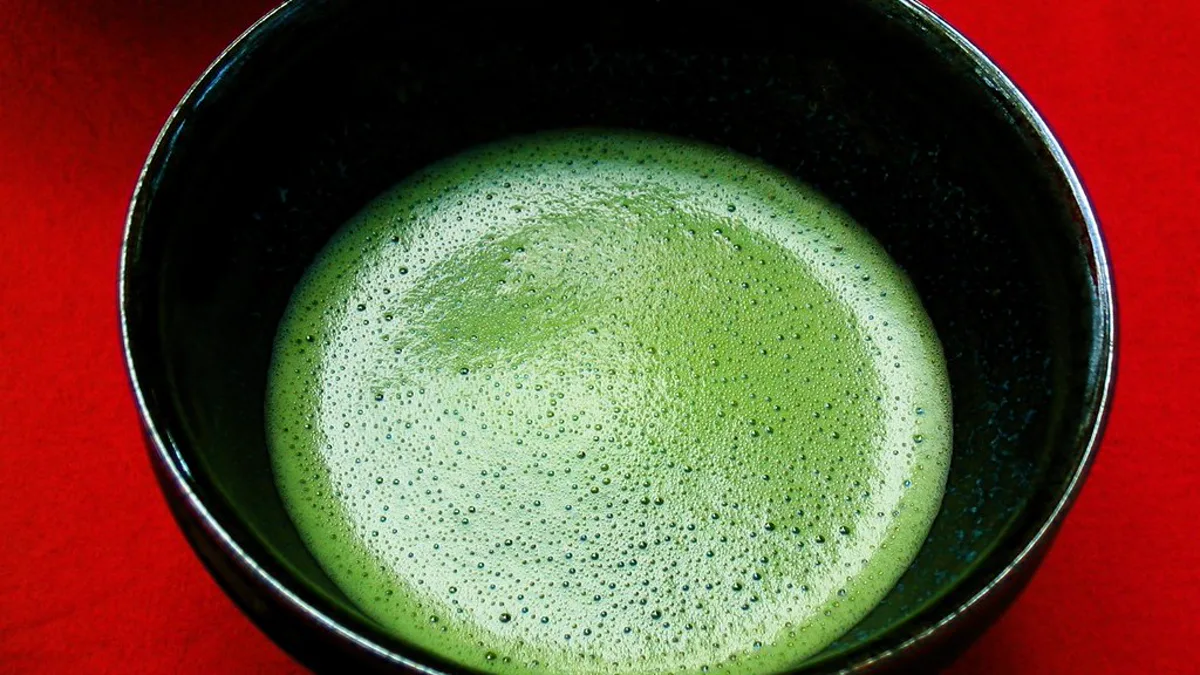
The exact matcha tea ratio dictates foam and sweetness by establishing the precise chemical suspension density required for stable micro-foam. Using two grams of powder to seventy milliliters of water balances savory L-theanine against bitter catechins, producing velvety mouthfeel without astringency.
Matcha powder is not water-soluble; it forms a colloidal suspension where microscopic plant particles float evenly throughout liquid. If your water volume is too large, the surface tension of the liquid cannot trap tiny air bubbles whipped up by the bamboo whisk.
Conversely, if you under-dose water, the suspension becomes hyper-concentrated and viscous, making rapid whisking mechanics physically impossible. The two-gram to seventy-milliliter formula creates the optimal fluid viscosity for generating microscopic bubbles.
Water temperature interacts directly with this ratio. Pouring boiling 100°C water onto two grams of matcha destroys delicate theanine amino acids, leaving harsh bitterness that ruins the sensory balance.
Modern analytical spectroscopy shows that the cellular structures of stone-ground tencha tea leaves release amino acids rapidly within the first twenty seconds of whisking. Maintaining adequate liquid volume prevents saturation limits from slowing this critical chemical dissolution.
How Do Ratios Differ Across Usucha, Koicha, and Matcha Lattes?
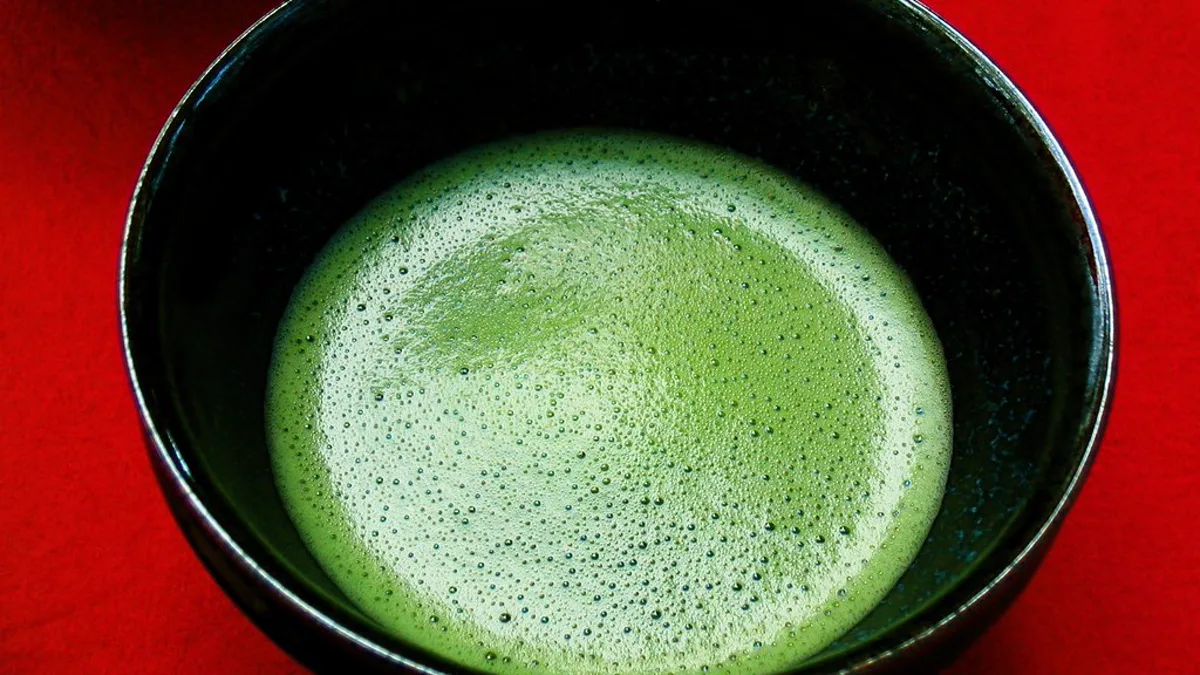
Ratios differ across styles based on desired beverage thickness and dairy dilution, with traditional usucha prioritizing delicate foam, koicha creating rich syrup, and modern lattes requiring dense shots to penetrate steamed milk. Matching gram weight to drink type ensures balance.
Review precise measurements, temperatures, and expected sensory profiles across all major matcha preparation styles:
| Matcha Style | Powder Weight (g) | Liquid Volume (mL) | Water / Milk Temp | Target Foam & Texture |
|---|---|---|---|---|
| Thin Tea (Usucha) | 2.0 g (2 scoops) | 70 mL water | 75°C to 80°C (167°F to 176°F) | Thick, creamy jade micro-foam |
| Thick Tea (Koicha) | 4.0 g (4 scoops) | 40 mL water | 80°C (176°F) | Glossy melted-chocolate consistency |
| Iced Matcha Shot | 2.5 g | 50 mL water over 100g ice | 70°C (158°F) initial whisk | Refreshing, crisp, sparkling green |
| Cafe Matcha Latte | 3.0 g | 50 mL water + 180 mL milk | 65°C (149°F) steamed milk | Rich, velvety sweet morning beverage |
Source: Japanese Tea Instructor Association Ceremonial Preparation Standards (reviewed October 2026).
Why Is Sifting Powder Mandatory Before Adding Hot Water?
Sifting powder is mandatory because microscopic matcha particles carry static electric charges that cause clumping into tight nodules. Dropping hot water onto unsifted powder seals dry clumps inside gooey skins that no amount of whisking can dissolve.
Because ceremonial matcha is ground between granite millstones to an average diameter of five to ten microns (finer than baby powder), electrostatic charges naturally build across particle surfaces.
These charges cause particles to clump together into dense pellets. If you pour hot water directly over unsifted powder, the exterior of each clump gelatinizes instantly, locking the dry interior inside a water-impermeable capsule.
You end up with a watery tea base filled with unpleasant bitter chalk chunks. Placing a small stainless steel fine-mesh sifter over your bowl and pressing the powder through with a bamboo spoon takes ten seconds and ensures silk-smooth froth.
Stainless steel kitchen strainers with fine mesh wire baskets work perfectly for home preparation. Sifting over parchment paper allows you to pour the de-clumped green powder smoothly into your bowl without losing micro-grams to kitchen countertops.

How Does Bamboo Chasen Technique Create Luxurious Micro-Foam?
Bamboo chasen technique creates micro-foam through rapid zig-zag wrist snapping in a W-pattern that beats air into the surface suspension without scraping bowl glaze. Gentle circular stirring fails to generate necessary shear forces for foam.
A traditional bamboo whisk (chasen) carved from a single piece of seasoned bamboo features between eighty and one hundred twenty curved, flexible tines. These tines are engineered to slice through water and aerate the suspension.
Never stir in lazy circular loops around the bowl. Circular stirring simply rotates the liquid without creating turbulence.
Instead, lock your elbow and snap your wrist rapidly back and forth in a vigorous zig-zag motion tracing the letter W or M. Keep the tips of the tines suspended just above the ceramic bottom to avoid bending bamboo tips.
Within twenty seconds of high-speed whisking, a dense blanket of fine jade froth covers the surface. Finish with a slow surface sweep to break any large remaining air bubbles.
The flexibility of natural bamboo tines is essential for creating authentic micro-foam. Metal whisks or kitchen forks cannot match the acoustic dampening and gentle surface tension shearing that curved bamboo tips deliver.
What Are the Five Essential Steps to Prepare Daily Morning Matcha?
The five essential steps begin with warming the ceramic bowl, sifting two grams of ceremonial powder, measuring seventy milliliters of seventy-five-degree water, whisking vigorously in a W-pattern, and savoring immediately while fresh. Consistency creates daily tranquility.
Follow these disciplined steps to produce a luminous, sweet bowl of ceremonial matcha every single morning:
- Warm the Bowl and Whisk: Pour hot water into your chawan bowl to soften bamboo tines and warm the ceramic before discarding the water.
- Sift Two Grams of Powder: Weigh two grams of ceremonial green matcha on a digital scale and push through a fine mesh sifter.
- Add Water at 75°C: Measure seventy milliliters of water cooled to 75°C to 80°C and pour gently down the inner bowl wall.
- Whisk Vigorously in W-Motion: Snap your wrist in a rapid zig-zag motion for twenty seconds until a creamy foam blanket covers the surface.
- Enjoy Immediately: Drink within three minutes before insoluble plant particles begin settling to the bottom of the bowl.
Frequently Asked Questions
Can I use boiling water to make matcha?
No. Boiling water at 100°C scorches delicate green tea amino acids, releasing intense bitterness and destroying delicate floral sweetness. Always cool water to 75°C to 80°C.
Can I make matcha with an electric milk frother instead of a bamboo whisk?
Yes. An electric handheld frother works well for everyday morning prep and matcha lattes, though a traditional bamboo chasen produces finer micro-foam without splashing.
Why does my matcha separate into water and powder after a few minutes?
Matcha is a physical suspension rather than a chemical solution. Over time, gravity causes microscopic leaf solids to settle to the bottom. Swirling the bowl re-suspends the powder.
What is the difference between ceremonial grade and culinary grade matcha?
Ceremonial grade is harvested from first-flush spring leaves with stems removed, offering sweet, umami flavors. Culinary grade uses older harvest leaves with stronger tannins designed to cut through milk.
How should I store open matcha powder to keep it green?
Store matcha in an airtight, opaque container in the refrigerator. Oxygen, light, and heat cause rapid oxidation that turns emerald green powder into dull brown within weeks.
How we researched this: Matcha preparation ratios follow Japanese Urasenke and Omotesenke tea ceremony protocols paired with modern culinary gram-scale measurements. An AI tool drafted the initial structure, and the writer verified every ratio and step.