The short pour The ideal french press coffee ratio is 1:15 (one gram of coffee to fifteen grams of water) for balanced immersion extraction. For an eight-cup (34-ounce) press, combine 60 grams of coarse grounds with 900 grams of water at 200°F (93°C). Steep undisturbed for four minutes before slowly pressing and decanting immediately.
Good coffee at home begins with a kitchen scale rather than a scoop. Volumetric scoops lie because dark roasts expand during roasting and occupy more physical volume per ounce than dense light roasts. Weighing coffee beans and water precisely ensures a consistent extraction curve every morning. Full immersion brewing in a French press exposes coffee grounds to water across the entire steep, making accurate ratios essential to avoid muddy or astringent cups.
Specialty Coffee Association (SCA) cupping standards define the Golden Cup ratio as fifty-five to sixty-five grams of coffee per liter of water. Translating these standards to French press immersion yields brew ratios between 1:14 (for heavy, bold profiles) and 1:16 (for delicate single-origin lots). Choosing 1:15 establishes a harmonious equilibrium, highlighting caramel sweetness while preserving natural aromatic oils.
- Baseline Golden Ratio: Start with 1:15 for rich body without excessive bitterness or heavy silt accumulation.
- Coarse Uniform Grind: Grind beans to coarse sea salt consistency to prevent fine particles from passing through metal mesh.
- Water Temperature Window: Brew with water between 198°F and 205°F (92°C to 96°C) approximately thirty seconds off the boil.
- Four-Minute Steep: Allow ground coffee to steep undisturbed for four minutes before skimming floating foam and plunging slowly.
- Decant Promptly: Pour brewed coffee immediately into ceramic mugs or an insulated thermal carafe to stop continuing extraction.
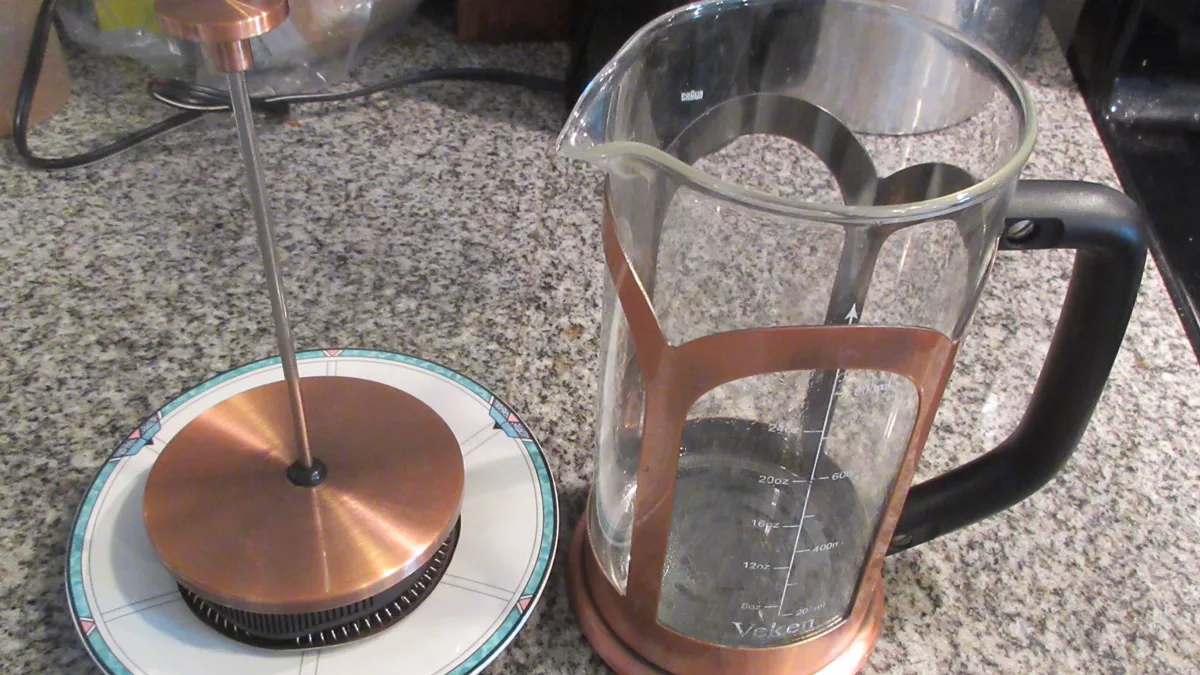
What Makes the 1:15 French Press Coffee Ratio Ideal?
The 1:15 french press coffee ratio achieves optimal sensory balance because immersion brewing extracts soluble flavor compounds more slowly than percolation pour-overs. Utilizing fifteen grams of water for every gram of ground coffee ensures complete saturation while preventing the over-dilution common to weaker ratios.
Unlike drip brewing where gravity continually draws fresh water through a bed of grounds, immersion keeps the same pool of water in contact with coffee throughout the steep. As the brew progresses, water becomes saturated with dissolved coffee solids, causing the rate of extraction to taper off naturally. A slightly tighter ratio like 1:15 compensates for this declining extraction rate, yielding rich tactile viscosity.
If you prefer a lighter, more tea-like clarity, loosening the ratio to 1:16 or 1:17 allows subtle floral and fruit notes from washed Ethiopian or Kenyan coffees to emerge. Conversely, lovers of traditional dark roasts who add milk or cream often favor a concentrated 1:14 ratio. Always adjust coffee weight first while keeping water volume constant to gauge differences clearly on coffee brewing.
How to Dose Coffee Grounds and Water by Carafe Size?
Measuring coffee by grams eliminates discrepancies caused by roast density and bean size. A standard French press rated as an eight-cup press actually produces approximately thirty-four fluid ounces (one thousand milliliters) of liquid, requiring sixty grams of coffee for a standard brew cycle.
European manufacturers typically designate a “cup” of coffee as four fluid ounces (one hundred twenty milliliters) rather than the standard American eight-ounce mug. Inspecting the actual liquid capacity of your glass or stainless steel beaker prevents under-dosing your brew. Fill the press with water while resting on a tared digital kitchen scale to determine exact fluid capacity.
Below is a precise reference table detailing dry coffee doses, water weights, and resulting drink yields across common French press carafe capacities using the standard 1:15 ratio:
| Carafe Size Designation | Total Water Volume | Ground Coffee Dose (1:15) | Approximate Finished Mugs |
|---|---|---|---|
| 3-Cup Press (Single Serve) | 350 grams (12 oz) | 23 grams | 1 generous ceramic mug |
| 4-Cup Press (Compact) | 500 grams (17 oz) | 33 grams | 1 to 2 standard mugs |
| 8-Cup Press (Standard) | 900 grams (30 oz) | 60 grams | 3 to 4 standard mugs |
| 12-Cup Press (Large Entertaining) | 1400 grams (47 oz) | 93 grams | 5 to 6 standard mugs |
Source: Specialty Coffee Association (SCA) Golden Cup Brewing Standards and Metric Brew Conversion Guidelines (checked October 2026).
Why Immersion Brewing Requires a Coarse Grind Size
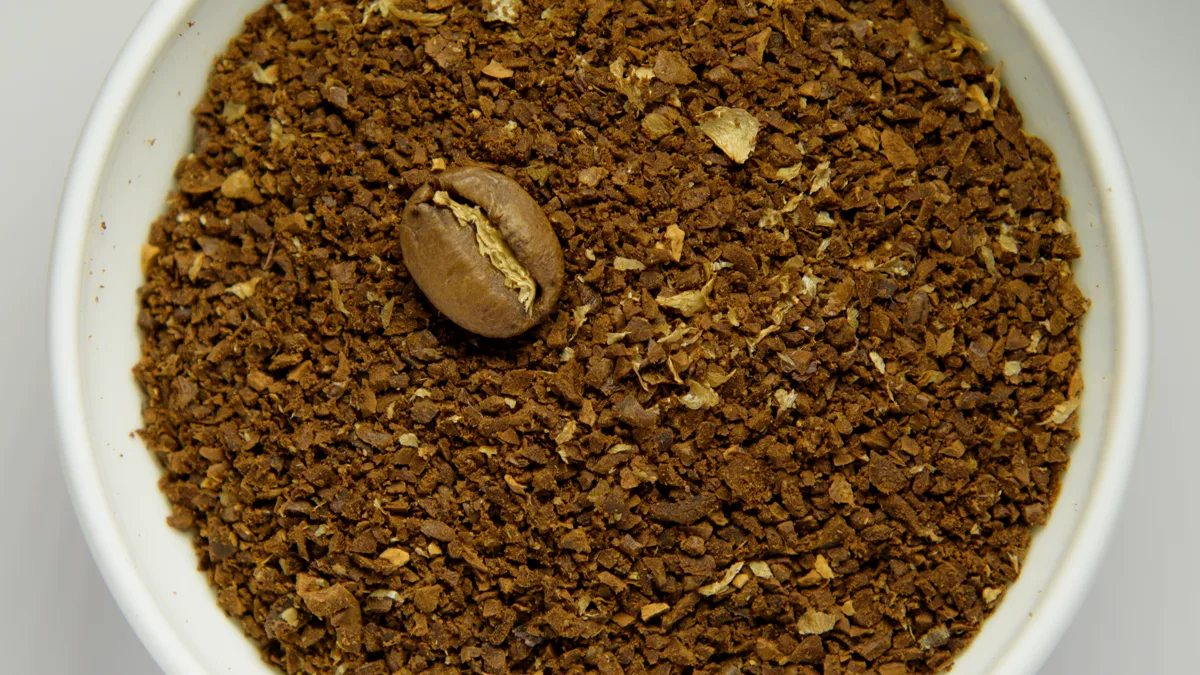
Coarse grind size prevents over-extraction and keeps fine particles from escaping past the metal mesh filter into your drinking cup. French press mesh screens feature pore openings between one hundred and two hundred microns, meaning fine grounds will inevitably migrate into the beverage, producing unpalatable muddy sludge.
Target a particle consistency resembling coarse sea salt or raw demerara sugar. Utilizing a quality burr grinder rather than a spinning blade grinder is paramount. Blade grinders fracture beans unpredictably, generating microscopic “fines” alongside massive chunks. Fines extract in seconds, releasing astringent bitter tannins, while large boulders under-extract, leaving sour vegetal notes.
If plunging requires severe physical downward force, your grind is excessively fine. Forcing down a jammed plunger risks boiling liquid spraying past the lid seal or cracking a glass carafe. The plunger should glide downward smoothly under gentle hand pressure alone.
Six Stages of French Press Immersion Brewing
Executing an intentional brew workflow supports consistent flavor clarity in every press. Follow these six chronological stages to master the full immersion ritual:
- Preheat the Carafe: Fill the empty vessel with hot tap water for thirty seconds to warm the glass walls, then discard before dosing.
- Add Coffee Grounds: Place the carafe on a digital scale, tare to zero, and add your weighed coarse grounds.
- Initial Water Pour: Start a timer and pour total brew water rapidly in a steady spiral, ensuring all grounds become fully submerged.
- Gentle Crust Stir: At the one-minute mark, use a wooden or bamboo spoon to gently stir the floating crust twice, causing grounds to settle.
- Four-Minute Steep: Place the lid on the carafe with the plunger resting just above the liquid surface to trap steam heat during the remaining steep.
- Gentle Plunge and Decant: At four minutes, press the plunger down slowly over fifteen seconds, then immediately pour coffee into pre-warmed mugs.
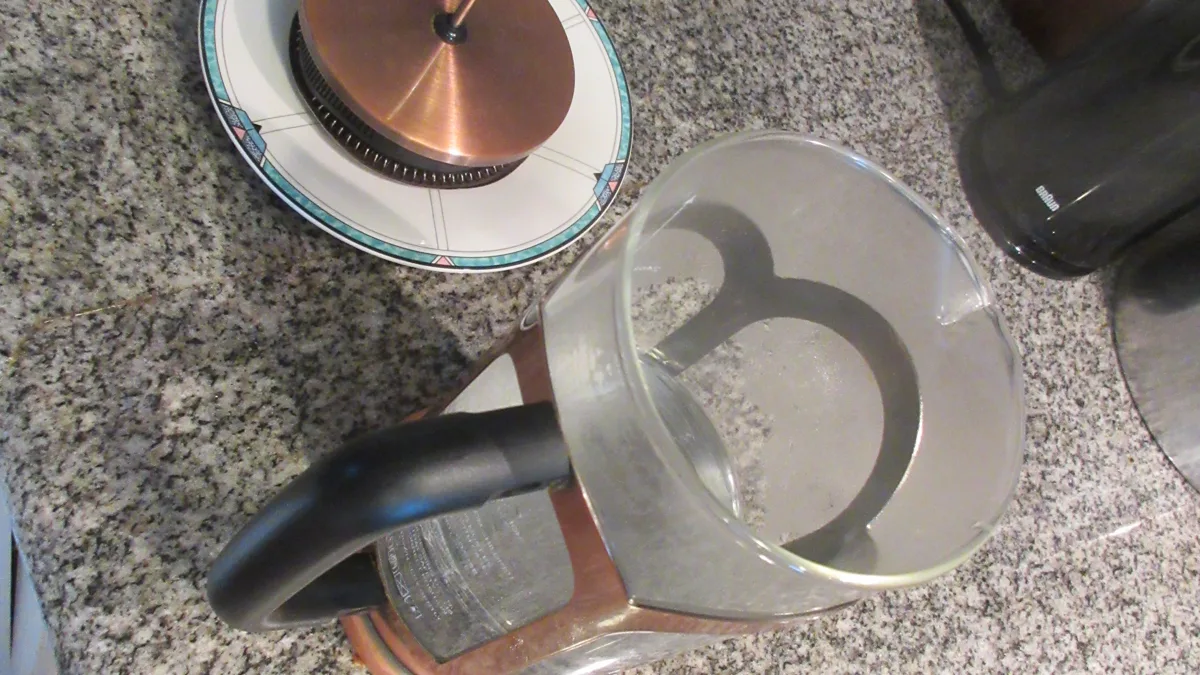
Never leave finished coffee sitting inside the French press carafe after pressing. The submerged coffee bed remains in direct fluid contact with the liquid at the bottom of the beaker. Leaving brewed coffee in the press causes extraction to proceed unabated, turning delicious morning coffee bitter and unpleasantly chalky within ten minutes.
How to Adjust the Ratio for Sour or Bitter Notes?
Diagnosing taste defects allows home brewers to calibrate ratios and grind settings systematically. Coffee extraction follows a predictable chemical progression: sour fruit acids extract first, followed by sweet lipids and sugars, ending with bitter astringent plant fibers.
If your finished coffee tastes sharp, unpleasantly sour, or lacks sweet body, your brew is under-extracted. You can remedy under-extraction by tightening your ratio (shifting from 1:16 to 1:15), extending steep time by thirty seconds, or grinding slightly finer. Verify that water temperature reaches at least 200°F (93°C), as cool water fails to extract complex sugars.
Conversely, if the cup produces a dry, puckering sensation on the back of your tongue with persistent harsh bitterness, the brew is over-extracted. Remedy over-extraction by loosening the ratio to 1:16, grinding coarser to reduce contact surface area, or shortening total steep duration to three minutes and thirty seconds. Modify only one brewing variable at a time so you can track taste changes accurately.
Frequently Asked Brew Questions
Can I make French press coffee without a digital kitchen scale?
While a digital gram scale provides unmatched consistency, you can approximate a 1:15 ratio using level tablespoons. Use roughly two level tablespoons of coarse grounds for every six fluid ounces of water as an emergency starting point, adjusting by taste.
What is the best water temperature for brewing French press coffee?
Water heated between 198°F and 205°F (92°C to 96°C) is ideal for immersion brewing. Bring fresh filtered water to a rolling boil and let it sit off the heat source for thirty to forty-five seconds before pouring onto ground coffee.
Should I stir coffee grounds immediately after pouring water into the press?
A gentle stir around the one-minute mark breaks the floating crust of grounds, allowing them to submerge and extract evenly. Avoid aggressive metal spoons that could chip glass beakers; use a wooden paddle or silicone utensil.
Why does my French press coffee have so much sediment at the bottom?
Sediment stems from microscopic coffee fines passing through metal mesh filters. Reduce silt by grinding coarser with a burr grinder, skimming the floating foam crust with two spoons before plunging, and leaving the final half-ounce of liquid in the beaker.
How do I clean coffee oil buildup from the mesh filter assembly?
Disassemble the screw-apart filter assembly weekly and soak metal components in warm water with baking soda or specialized coffee detergent. Dissolving rancid coffee oils prevents stale oxidized flavors from contaminating subsequent brews.
How we researched this: Ratios and temperatures come from specialty coffee industry guidance and are offered as starting points. An AI tool drafted the rough version, and the text was rewritten and checked by a human editor.